


Taking Charge:
Lowering Your Risk of Breast Cancer
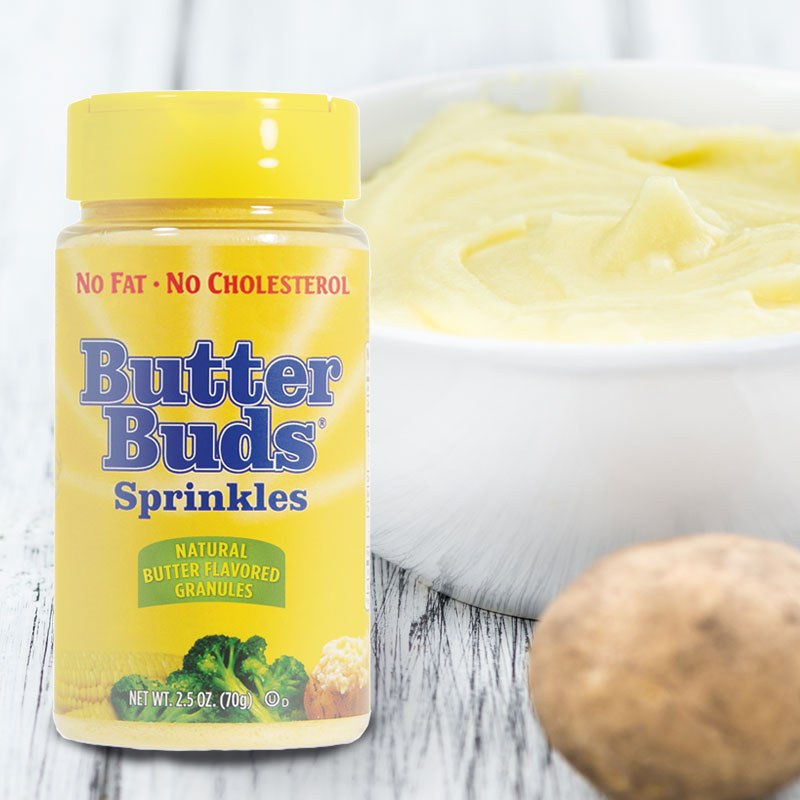
Butter Buds all natural butter flavor granules, with zero fat or cholesterol, is committed to promoting healthier living. Taking Charge: Lowering Your Risk of Breast Cancer has been written to provide you with some of the latest information regarding breast health as well as some dietary and physical activity recommendations you can incorporate into your own healthier lifestyle. This feature is not intended as a replacement for professional care. As always, for a complete diagnosis and treatment, it is important to see your doctor.
![]()
The Facts
Breast cancer is the most common cancer among American women---striking about 110 out of every 100,000 women. And, it is the second leading cause of death from cancer in women, surpassed only by lung cancer. It is estimated that in the United States
- women will develop 184,300 new cases of breast cancer
- 44,300 women will die from breast cancer
Breast Cancer Watch
Early diagnosis is the key to improving your chances for successful treatment. It is important to catch a tumor while it is still very small---before it damages surrounding tissues and spreads to other parts of the body. Women treated for breast cancer that has not spread have a five-year survival rate of 96 percent, a ten-year survival rate of 65 percent, and a 15-year survival rate of 56 percent. The five-year survival rate for breast cancer that has spread to areas near the breast is 75 percentthis drops to 20 percent if the cancer has spread to distant parts of the body.
Here are some tips on how to take responsibility for your own breast health.A mammogram, which is a special X-ray of the breast, is one of the most valuable tools in the early detection of breast cancer. Mammography can often show suspicious areas while they are still too small to be felt. However, the fact that you have a normal mammogram is not a guarantee that no cancer is presenta very small percent of breast cancers can't be seen on a mammogram. The only way to know whether or not a suspicious lump or other area is cancer is to have a breast biopsy.
- Do a monthly breast self-examination, starting at age 20. Ask your gynecologist to show you how to do a breast self-exam.
- Women ages 20 to 40 should have a breast examination by a doctor, preferably a gynecologist, every three years; examinations should be yearly over age 40.
- Women ages 40 to 49 who have no symptoms should have a screening mammogram every one to two years. Yearly mammograms are recommended for women ages 50 and older.
- See your doctor immediately if you notice any of the following changes in one or both of your breasts: a lump, thickening, swelling, dimpling, a skin irritation, distortion, retraction (indentation) of the nipple, scaliness, pain, tenderness of the nipple, or a discharge from the nipple.
Remember, even if you do find a breast lump, there is a good chance that it is not cancer. Only your doctor can make the diagnosis.
Taking a Look at Breast Cancer Risk
Researchers have identified the following factors that may increase your risk of developing breast cancer. They include:Your chances of developing breast cancer increase as you get older. From ages 40 to 59, your chances are one in 26; between ages 60 and 70, your chances increase to one in 14, almost doubling your risk of developing breast cancer. Your overall chance of developing breast cancer over your lifetime is one in eight.
- age
- family history of breast cancer
- exposure to radiation or certain chemicals, which can damage cells and make them cancerous
- induced abortion
- beginning menstruation at an early age
- first pregnancy at an older age
- natural menopause at an older age
- long-term use of estrogen after menopause
There is promising news in the area of genetic research for families with a history of breast cancer. Researchers recently identified two defective genes (BRCA-1 and BRCA-2) that are associated with the development of breast cancer. This knowledge may allow early identification of those women who have an inherited tendency toward this serious disease.
Researchers believe that starting to menstruate at an early age, pregnancies starting later in life, late menopause, and long-term estrogen use after menopause may increase breast cancer risk because they all increase a woman's total exposure to the hormone estrogen over her lifetime. Before deciding to take postmenopausal estrogen, carefully evaluate your risk of developing breast cancer versus other disease. Estrogen has been shown to have a protective effect against heart disease and osteoporosis. Your doctor will be able to help you make the best decision for you.
What About Diet and Lifestyle?
Have you ever wondered why one day you read in the newspaper that something, such as diet, increases your risk of cancer and a few weeks later you read that there is no connection at all? It can be very confusing! Some research studies have suggested that eating a diet high in fat and low in fiber increases your risk of breast cancer; while others have not found this link.
There are a few reasons why the possible association between breast cancer and diet and other lifestyle changes deserves a closer look. First, a number of well-planned studies do provide convincing support for these connections. Second, this is one of the few times when the old saying 'even if it doesn't help, at least it can't hurt' is actually true!
There are studies that suggest that you may be able to reduce your risk of developing breast cancer by
- achieving and maintaining a desirable body weight
- increasing your level of physical activity
- limiting alcohol comsumption
- eating a diet low in fat and high in fiber
- eating fruits, vegetables, whole grains, and soybeans
Obesity
Obesity may slightly increase the risk of developing breast cancer in postmenopausal women. Exercising, limiting alcohol consumption, reducing dietary fat intakeby increasing fiber, and eating fruits, vegetables, whole grains and soyfoodsall fit into a common-sense approach to long-term weight control.
The Alcohol Connection
There is convincing evidence that women at increased risk for developing breast cancer might want to consider limiting their alcohol consumption. Certain research studies have shown that, compared to non-drinkers, women consuming only one drink per day may increase their risk of developing breast cancer by 11 percent; two drinks per day may increase risk by 20 to 25 percent.
The Exercise Edge
There is some evidence that regular exercise decreases breast cancer risk, most probably by lowering the level of estrogen. And, of course, regular exercise has been shown to aid in weight control, to lower the risk of heart disease, reduce postmenopausal bone loss, and generally improve the quality of life. Check out some of your favorite activities in this chart to see how you can achieve the exercise edge.
Approximate Energy Expenditures
(150 lb. person)
Activity Calories per hour Lying down or sleeping 80 Sitting 100 Driving a car 120 Standing 140 Domestic work 180 Walking (2.5 mph) 210 Bicycling (5.5 mph) 210 Gardening 220 Ballroom dancing 225 Golf; lawn mowing w/power mower 250 Bowling 270 Walking (3.75 mph) 300 Swimming (.25 mph) 300 Rollerblading 384 Tennis (recreational singles) 450 Aerobic dancing 546 Skiing (10 mph) 600 Squash or handball 600 Bicycling (13 mph) 660 Running (10 mph) 900
Source: USDA/USDHHS Dietary Guidelines for Americans and The President's Council on Physical Fitness & Sports, Washington, D.C.
The Fascinating World of Fat, Fiber and Phytochemicals
Researchers cannot agree on the possible link between fat intake and breast cancer. While some studies show that decreasing fat, especially saturated fat, may reduce your risk of developing breast cancer, others indicate that a higher fat intake is not associated with increased breast cancer risk when much of that fat is monounsaturated, such as in canola or olive oil.
If you have a family history of breast cancer, you may wish to reduce your intake of fat to 20 percent or less of calories. You can cut fat in your diet to 20 percent by choosing only the leanest meat, fish, and poultry (skinned), lowfat or nonfat dairy products, and by limiting your use of fats and oils in cooking as well as at the table. Try using a fat-free butter substitute, for example, to cut down on fat but not on flavor.
Some studies show that eating fiber may reduce your risk of breast cancer. People who eat a lot of fiber often follow a lowfat diet. And, the main fiber-containing foods (fruits, vegetables, whole grains, soybeans) also contain other substances that may reduce breast cancer risk. Some studies suggest that vitamins A, C, and beta-carotene, a substance that your body can turn into vitamin A, may decrease your risk of breast cancer.
The most fascinating area of cancer research today is phytochemicals, or 'plant chemicals.' Phytochemicals aren't vitamins or minerals. They are other substances naturally found in fruits, vegetables, whole grains and soybeans. Researchers currently are just discovering the protective effects of some of these disease fighters.
It's Your Choice
Changing your diet and lifestyle is the best chance for you to reduce your risk of developing breast cancer. You have nothing to lose and everything to gain by:
It's never too soon to take steps to reduce your risk of developing breast cancer. Although breast cancer may seem to appear suddenly, it has usually been growing for ten to 15 years before it is discovered. So don't wait to make these changes in your diet and lifestyle. Why not start today with these healthy and delicious lowfat recipes...
- reducing excess weight
- exercising regularly
- decreasing or eliminating your consumption of alcohol
- decreasing your intake of fat, especially saturated fat
- increasing your intake of fiber, vitamins, and phytochemicals by eating more fruits, vegetables, whole grains and soyfoods